
A fun, cheerful holiday greeting from Denver Streets Partnership!

A fun, cheerful holiday greeting from Denver Streets Partnership!

Anyone trying to drive through downtown Denver at rush hour knows how maddeningly slow that commute can be.
Denver Public Works is trying to help speed up the process for those who take transit by eliminating parking on the right side of 17th Street so buses can have a dedicated lane 24/7.
The conversion concerns residents who have seen regular traffic lanes converted to bus-only on other city streets, like Broadway and 15th Street.
“It’s awful,” said Ashley Sayre. “Nobody looks forward to rush hour. Everybody gets crabby toward the end of the day. They know they have to sit there for however long.”
“I think the city should vote on different solutions,” she said.
Alycia Ostby has a different take. She’s okay with lanes being dedicated to buses only.
“I don’t care. I think that’s just the price that we pay to be better about building our community,” she said.
Thomas Ellison agrees.
“Downtown congestion is pretty bad,” he said. “I think having a lane that’s dedicated to just buses is a good way to get people on their feet, to choose alternate forms of transportation, so I’m a big fan of it.”
Heather Burke at Denver Public Works said the transit-only lane currently extends from Market Street to Broadway, but will be extended to Blake Street once building construction in the area is complete.
The transit-only lanes have been marked with red paint, and new signs on traffic light poles.
She said as Denver grows, transit will become more critical to moving people around.
“A lot of people tell us they would be more likely to take transit if we had a more reliable and predictable system in Denver, and that’s what we’re working to build,” she said.
Burke also said a protected bike lane will soon become part of the picture on 17th Street.
“The goal that we’re trying to reach is to provide people other ways for getting around town, and have them feel comfortable making those other choices,” she said, “to get them where they need to go, and to get where they need to go, safely.”
Burke told Denver7 that transit-only lanes are also planned for 18th and 19th Streets in 2020 and 2021.
She said protected bike lanes will be part of the picture on those corridors.

With the exit of B-Cycle from the bike-sharing community and a request for proposal to be sent out for a new vendor to replace it, it is time to look to the future when it comes to bikeshare. In the year 2020, what does a successful bike-sharing system look like? How should a preferred vendor by the City and County of Denver operate in the age of dockless bikeshare such as Jump and competition from venture capital? How should we build on the success of B-Cycle? As a cyclist and someone that used the B-Cycle system heavily over the past year, here are some of my suggestions when it comes to what a vendor should be able to provide Denverites and tourists when it comes to building out a successful citywide bike-sharing system.
Where We’re Going, We Don’t (Always) Need Docks
Companies that provide completely dockless bikeshare such as Jump provide the option to park a bike without having to have a set place to dock it. While this has caused a big discussion to emerge when it comes to pedestrian right-of-way and people with disabilities trying to navigate around them, it still remains one of the most compelling reasons for tourists and Denverites to use Jump. At the same time, docks often provide a guaranteed place to park away from foot traffic and a reliable place with a certain set number of bikes at the beginning of the day. A future bikeshare vendor should take note of these facts, possibly modeling the aspect of “docking” a bike after the system that Jump bikes uses by locking the bikes up to a bike rack while still maintaining a set number of physical docks in the city.
Have an All-in-One App
As a cyclist, I use a handful of apps when I plan my commute on any given day. Before I even go on a ride, I check the weather app on my phone to see whether I should layer up or put a fender on to avoid getting splashed. I use Google Maps to find the best way to get to my destination by bike, and use Strava to record my ride and broadcast it to the world. While all of these apps are effective at getting me to my destination safely and documenting my ride for posterity, I would like to have something that incorporates all of these items and adds one unique component.
Finding a place to lock up my bike can be a bit of a hassle sometimes. While Google is generally good when it comes to finding a fairly safe route for me to ride on, it fails when it comes to finding a place to park. If a bikeshare company in the city is looking to be successful when it comes to encouraging riding bikes, any app that is associated with it should integrate a feature that shows nearby bike racks and areas to lock a bike up to that are relatively close to the person’s destination.
Fair Fares
One of the biggest barriers to me when it initially came to using bike-sharing was the cost. As someone with my own bicycle, maintenance costs were significantly lower than the cost of individual rides, and I only adopted B-Cycle religiously when the 5280 Pass came out. To ensure that a bikeshare company is used to its ultimate extent, fares for the system have to balance making sure there is a solid revenue stream for the company and lowering the financial barriers that people often face when using their service. To do so, I propose creating a three tiered system. People visiting from out of town would, in most cases, pay full price for the service. For local residents of Denver, the cost of passes should be 50% of the cost to “out of towners.” This subsidized rate would encourage more trips on this program, and would hopefully create a revenue stream that is sufficient to keep the service running. For low-income individuals, the service should be free.
Conclusion
To build on the successes of B-Cycle, a successful follow-up program should have the aspects listed above. If the city is serious in its commitment to add 125 more miles of bike lanes over the next five years, these lanes should be occupied by people from all backgrounds and walks of life.
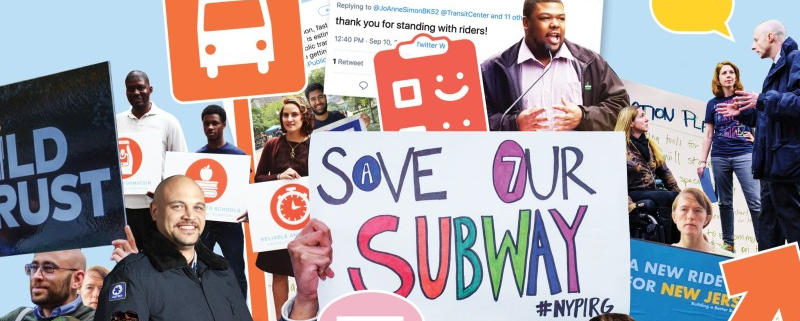
If you’re a transit rider in just about any American city, chances are the service you rely on falls somewhere between not-great and awful. The closest bus may only run once an hour, your train may be constantly delayed, or you may feel like the simple act of crossing the street to reach the bus stop is not worth the risk. To make matters worse, it often seems like no one in a position of power cares.
Strong campaigns for better transit can emerge from these frustrations. The question is how to translate the energy of transit riders into political power capable of generating policy change.
A new generation of transit advocates is rising to the challenge. They are organizing riders and winning improvements like bus lanes, funding to increase service, and fare discounts for riders with low incomes. These victories are making a difference in transit riders’ lives right now and advancing the long-term goal of achieving broad-based access to fast, frequent, reliable, affordable transit.
TransitCenter’s new report — “Winning Transit” — pulls together the experience of advocates throughout the country into a guide for running successful transit campaigns. We hope it will be a valuable resource for anyone involved in transit advocacy, whether they’re just starting out or already have some wins under their belt.
While there is no single formula for transit advocacy, successful campaigns tend to share a few traits in common. Here are five rules of thumb that will help advocates win better transit.
Set specific, attainable goals
The single greatest distinction we observe between organizations that are achieving tangible transit improvements for their cities and organizations that are struggling to gain traction is the difference between strategic, goal-oriented work and amorphous, general pro-transit messaging.
It’s not enough to assert that transit is good — you have to describe what’s wrong with transit in your city and generate pressure to address the problem.
In 2017, Active Transportation Alliance in Chicago (ActiveTrans) identified slow, unreliable bus service as a major impediment for riders. Their “Back on the Bus” campaign proposed three objectives for Chicago DOT and CTA: more bus lanes, all-door boarding, and bus priority at intersections. During the recent mayoral campaign, then-candidate Lori Lightfoot endorsed ActiveTrans’ goal of adding 50 miles of bus-priority streets — a policy Lightfoot has continued to pursue as mayor.
Identify who can solve problems
Successful advocates name names. Elected officials and agency executives respond to public pressure, and the only way to create that pressure is to inform people who is responsible for solving their transit problems. Advocates have to focus public attention directly on those decisions makers.
When the Miami-Dade budget called for cuts to transit service, for instance, Transit Alliance targeted Mayor Carlos Gimenez, mobilizing riders to send 1,000 postcards to the mayor opposing the cut. The final budget restored $15 million for transit, preventing cuts to service and reductions in maintenance.
Use a rider’s perspective and compelling statistics
Advocates are in their best rhetorical position spotlighting and explaining problems that riders face on a regular basis. The most effective messages combine the human impact that politicians and reporters respond to with the quantitative analysis that policy makers find convincing.
Livable Streets in Boston recently released a report — “64 Hours: Closing the Bus Equity Gap” — which called attention to the fact that black bus riders spend 64 more hours per year on the bus than white riders. That powerful finding was widely cited in the press, and has become a rallying point for people pushing to equitably improve bus performance with more service and dedicated transit lanes.
Use a variety of tactics to sustain pressure
Effective campaigns sustain pressure on public officials over time. If advocates don’t keep the campaign in the public eye, the motivation for officials to act will fade as other issues occupy their attention. Mapping out a schedule of external events — such as political calendars and budget cycles — will help keep advocacy focused and on track.
Through its Fair Fares campaign, New York’s Riders Alliance set out to make half-priced fares available hundreds of thousands of New Yorkers with low-incomes. Working with partners like the Community Service Society, an anti-poverty organization, Riders Alliance generated a steady stream of public pressure on Mayor Bill de Blasio. Through petitions, letters to City Hall, press conferences timed to major budget season milestones, and other tactics, they sustained a sense of urgency for the mayor to act. In 2019, Fair Fares became an official city program, and in 2020 it is slated to expand to every New Yorker living below the federal poverty line.
Support officials working to improve transit
Many staff working at transit agencies and city DOT’s share advocates’ goals of improving transit service. These officials want to pursue projects like transit lanes or bus network redesigns but face political constraints. Advocates have to create the political space where reform-minded officials can act. When positive changes are on the line, effective advocates mobilize interested residents, collect signatures in support, turn people out to testify at public hearings, and make the case for implementation in local media. They back up the agency when it takes on difficult initiatives, and then push it to do even more.
Walk San Francisco and San Francisco Transit Riders Union supported the implementation of two San Francisco Municipal Transportation Agency projects: the 27 Bryant Transit Reliability Project and the Mission Street Excelsior Safety Project. Key to both is the addition of larger bus stops and bus bulbs, which often repurpose parking spaces. The groups rallied support from transit riders to counter parking loss concerns in the Tenderloin and Excelsior neighborhoods. They succeeded, and the projects are proceeding.
Changing a city’s transportation system doesn’t happen overnight. In American cities, advocates face many challenges as they attempt to expand access to fast, reliable transit service. But groups across the country are showing that with energetic campaigning, strategic thinking, and persistence, even the most daunting obstacles to good transit can be overcome.
Speakers – Naomi Amohoaw-Goldneck from the American Heart Association shared about her participation with the Denver Streets Partnership. Her focus is working on transit policy and establishing a working relationship with local City Council and Boards. The American Heart Association believes that working with groups like DSP helps building healthier environments and providing transit equity to our populations. Two of the major efforts for DSP includes, getting the City of Denver to dedicate funding on an annual basis. Currently there is 18 million dollars dedicated to sidewalks and bike trails. However, DSP has identified annual need of 120 million dollars to complete sidewalk and bike trails in twenty years. The second major effort by DSP is to build working relationships with elected and appointed policy makers to insure that expansion and development of our City meets the needs of our citizens.
Our second speaker was Ron Burke from Lyft (Scooter and Bike Division). He spoke about the development of scooter use in Denver. Lyft currently has 684 scooters in Denver. Lyft has been working closely with City policy makers on making scooters safe and available to Denver citizens. Ron shared that the City of Denver will be looking for one vendor in January to provide both scooter and dock or dockless bike system. Lyft is hoping to be involved in both efforts as the lead contractor or sub-contractor. Lyft currently owns “Motivate” the largest bike share resource in the country. Lyft and DCLCC have had preliminary discussions on holding a safety rodeo in 2020. Representatives from Cargo Bike and Lyft (scooters and bikes) will teach participants on how to safely operate their products.

The city is headed back to the drawing board to figure out potential improvements to Quebec Street in Denver’s far east neighborhoods.
In September, Denver scrapped plans calling for two more traffic lanes on the major corridor, which currently has two lanes for most of its length. Principal Project Manager Brian Pinkerton said an environmental assessment for the project and public opinion revealed there would be major issues with the right-of-way affecting several homes along the corridor.
Now, the city is taking a step back to reevaluate. Its budget is significantly smaller: $1 to $3 million, down from the original $23 million. Federal grant money allocated by the Denver Regional Council of Governments became unavailable because it wasn’t used within the required timeframe.
The project focuses on the stretch of Quebec Street between 26th Avenue and 13th Avenue. The corridor intersects with another major roadway, Colfax, and runs through five neighborhoods: East Colfax, Montclair, North Park Hill, South Park Hill and Stapleton.
The overall vision for improvements has been tweaked. There will be more attention paid to improving the pedestrian experience along the corridor, though there are no set proposals yet. Broadly, Pinkerton said this could mean sidewalk improvements — or in some cases adding sidewalks where there are none — as well as adding bus shelters and improving crosswalks.
Denver Public Works spokeswoman Heather Burke-Bellile said in an email about 50 percent of the Quebec Street corridor has either no sidewalks or narrow attached sidewalks. That includes both east and west sides of the street.
“It is a heavy use corridor, including for pedestrians,” Pinkerton said. “Right now, there are dirt paths on the side of many stretches.”
Pinkerton said too many houses would be affected by the project if they continued adding additional northbound and southbound car lanes as initially planned. The impact would be “too great” to justify the improvement, Pinkerton added. It would have required the city taking bits of people’s properties, like driveways or even yards, to give the city space to make the infrastructure changes.
Overall, that initial plan “fell short of other goals and priorities,” he added.
“There were a number of properties where it was on that border,” Pinkerton said. “We just had to back off the idea of trying to make it four lanes.”
Disagreements between residents and the city on where the right-of-way ended and started would have likely led to court battles. Pinkerton said where these invisible lines begin and end varies throughout the corridor, complicating things.
To help with traffic congestion, Pinkerton said, the city is also considering making signal improvements or a turn lane.
Councilman Chris Herndon, whose district includes a large chunk of Quebec, said they he’s had several opportunities already to hear from residents. In fact, Herndon said he’s been having conversations about this corridor “for years.”
Safety is a big concern, he said, as well as making transit run better.
“That includes pedestrians, and the easiest way you think about that is sidewalks,” Herndon said. “We want to make sure that pedestrian access via sidewalks is paramount.”
Monica Martinez, executive director at nearby The Fax Denver, said her organization did not take a formal stance on the project’s previous plan. But she added that when she looked into it more, she felt the suggestion to expand Quebec was “problematic.”
“We definitely support East Colfax and transit and making streets more pedestrian-friendly and transit-oriented,” Martinez said, adding that expanding the roads didn’t seem “consistent” with their values.
Pinkerton said moving forward, residents can expect public meetings to discuss the project during the first quarter of next year.


